Maheshwari sarees are more than just six yards of fabric—they are threads of history, grace, and timeless artistry. Known for their exquisite craftsmanship, luxurious textures, and deep cultural symbolism, these sarees hold a special place in India’s textile legacy.
Originating from the historic town of Maheshwar in Madhya Pradesh, Maheshwari sarees have adorned queens, noblewomen, and fashion connoisseurs for centuries. Their lightweight silk-cotton blend, intricate motifs, and regal appeal make them a treasured heirloom and a modern style statement.
The Royal Beginning: Maharani Ahilyabai Holkar’s Vision
The origin of Maheshwari sarees dates back to the 18th century, during the reign of Maharani Ahilyabai Holkar, one of India’s most celebrated queens. A patron of art and architecture, she envisioned a fabric that mirrored the elegance of her royal court and the beauty of Maheshwar’s architecture.
She invited skilled weavers from Surat and Malwa to craft a saree that was light, versatile, and luxurious. The result was the Maheshwari saree—a masterpiece blending silk and cotton, adorned with motifs inspired by temples, ghats, and palaces of Maheshwar.
Unique Weaving Techniques & Fabric
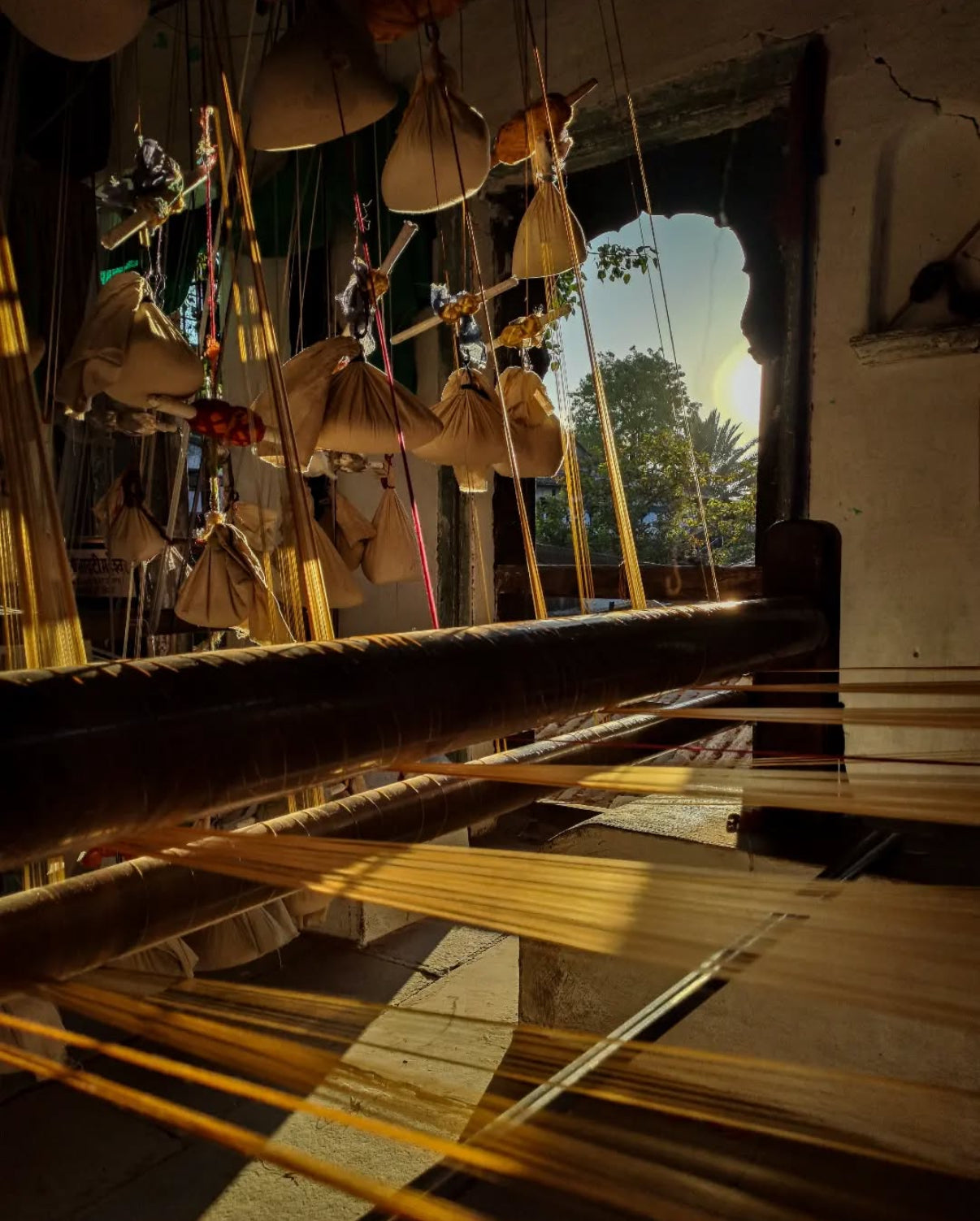
The charm of a Maheshwari saree lies in its handloom weaving, where every thread is placed with precision and patience. A single saree may take days to complete, making each piece truly unique.
Key features include:
-
Silk-Cotton Blend – Lightweight comfort with a regal finish.
-
Reversible Border (Bugdi) – Can be draped on both sides, a rare artistry.
-
Zari & Resham Embroidery – Intricate gold, silver, and silk thread work.
-
Handwoven Exclusivity – No two sarees are ever identical.
Traditional Varieties
-
Chandrakala – Subtle shine with plain elegance
-
Baingani Chandrakala – Rich purple grandeur
-
Chhabadi – Sarees with elegant stripes
-
Beli – Intricate floral artistry
-
Parbi – Fusion of multiple weaving styles
Motifs Inspired by Maheshwar’s Splendor
Each Maheshwari saree is a canvas of storytelling. Its designs echo the town’s heritage:
-
Eent (Brick Motif) – Inspired by Maheshwar Fort’s walls
-
Heera (Diamond) – Symbol of prosperity
-
Chatai (Mat Weave) – Reflecting traditional crafts
-
Chameli (Jasmine) – A touch of purity and beauty
-
Leheriya (Wave Motif) – Inspired by the gentle flow of River Narmada
These motifs don’t just beautify the fabric—they narrate the tale of a city steeped in culture and devotion.
Evolution Through Centuries
From royal courts to contemporary wardrobes, Maheshwari sarees have traveled a long journey. While traditional shades like pomegranate red, rani pink, and gulbakshi purple remain timeless, today’s weavers experiment with pastel tones, modern silhouettes, and fusion drapes to suit younger generations.
International designers too are embracing Maheshwari weaves in fusion wear—lehenga skirts, jackets, and gowns—ensuring this legacy stays relevant in the global fashion scene.
Cultural Significance & Global Appeal
In India, Maheshwari sarees are cherished for weddings, festivals, and spiritual ceremonies. Globally, they are admired as symbols of sustainability, authenticity, and slow fashion. Their eco-friendly production process and artisan-driven heritage align with the values of conscious consumers worldwide.
Owning one is not just about fashion—it’s about carrying forward a tradition that empowers local weavers and keeps India’s textile heritage alive.
Why Every Woman Should Own a Maheshwari Saree
-
Lightweight & Comfortable – Perfect for all climates
-
Royal Elegance – Blending tradition with sophistication
-
Versatile Styling – From festive drapes to contemporary fusion
-
Sustainable Luxury – Supporting artisans & ethical fashion
When you drape a Maheshwari saree, you don’t just wear an outfit—you carry with you the soul of a queen, the rhythm of the Narmada, and the heritage of centuries.
Conclusion
In today’s fast-fashion world, a Maheshwari saree stands as a reminder of timeless beauty and conscious luxury. Each weave is a masterpiece—handcrafted with love, inspired by history, and designed to be treasured for generations.
So, the next time you wrap yourself in a Maheshwari saree, remember—you are not just wearing fabric, you are embracing a royal legacy.